Limited Duration of Human Studies The longest published human trial data extend only 48 weeks: Durability of weight loss beyond one year remains unknown Weight regain patterns after treatment discontinuation not characterized Long-term metabolic improvements and sustainability of glycemic control require investigation Potential for development of tolerance or tachyphylaxis with extended treatment unclear Cardiovascular Safety and Efficacy Critical cardiovascular questions remain unanswered: No completed cardiovascular outcomes trials demonstrating reduction in major adverse cardiovascular events Long-term effects of sustained heart rate increases incompletely characterized Impact on cardiovascular morbidity and mortality in high-risk populations unknown Optimal patient selection criteria for cardiovascular risk-benefit assessment not established Body Composition and Metabolic Adaptation Concerns Important questions persist regarding the quality of weight loss: Proportion of lean mass loss versus fat mass loss over extended treatment periods Effects on resting metabolic rate and potential metabolic adaptation Impact on bone mineral density with sustained weight loss Long-term consequences of rapid, substantial weight reduction on nutritional status Mechanistic Understanding Gaps Fundamental aspects of GLP3 s action require clarification: Relative contribution of each receptor system (GIP, GLP-1, glucagon) to overall efficacy Tissue-specific receptor activation patterns and their physiological consequences Mechanisms underlying superior weight loss compared to dual GLP-1/GIP agonists Potential for receptor desensitization or internalization with chronic exposure Safety in Diverse Populations Clinical trial populations have been relatively restricted: Limited data in elderly populations (over 75 years) Safety and efficacy in adolescents and young adults not established Effects in patients with advanced renal or hepatic impairment incompletely characterized Reproductive safety studies and pregnancy outcomes data absent Use in patients with inflammatory bowel disease or gastroparesis not evaluated Regulatory & Competitive Sport Status FDA Position GLP3 has not received FDA approval for any indication: Currently in Phase 3 clinical development with multiple ongoing trials in the TRIUMPH program Classified as an investigational new drug, available only within clinical trials Not approved for medical use in humans outside of research protocols Cannot be legally prescribed, dispensed, or marketed for therapeutic purposes Federal law explicitly prohibits use in compounded medications under sections 503A and 503B of the Federal Food, Drug, and Cosmetic Act The FDA has issued warning letters to companies marketing or distributing GLP3 products, emphasizing that it is not approved for human therapeutic use and has not been found safe and effective for any condition[18]

Ipamorelin, on the other hand, is considerably simpler in structure
The study found that the effect of melatonin was not due to the melatonin receptors but rather acts in a receptor-independent manner to clear amyloid-beta plaque.[ref] In addition to clearing amyloid-beta plaque, another way that melatonin can protect against Alzheimers is through the reduction of ROS in the mitochondria in brain cells.[ref] This may be the key, rather than amyloid-beta clearance
Designed to support smoother, clearer, healthier-looking skin
There are no honest cuts that I can think of, Carter said
As the global population ages, the incidence of PD is expected to rise, underscoring the crucial need for ongoing research to identify its risk factors (Kouli et al










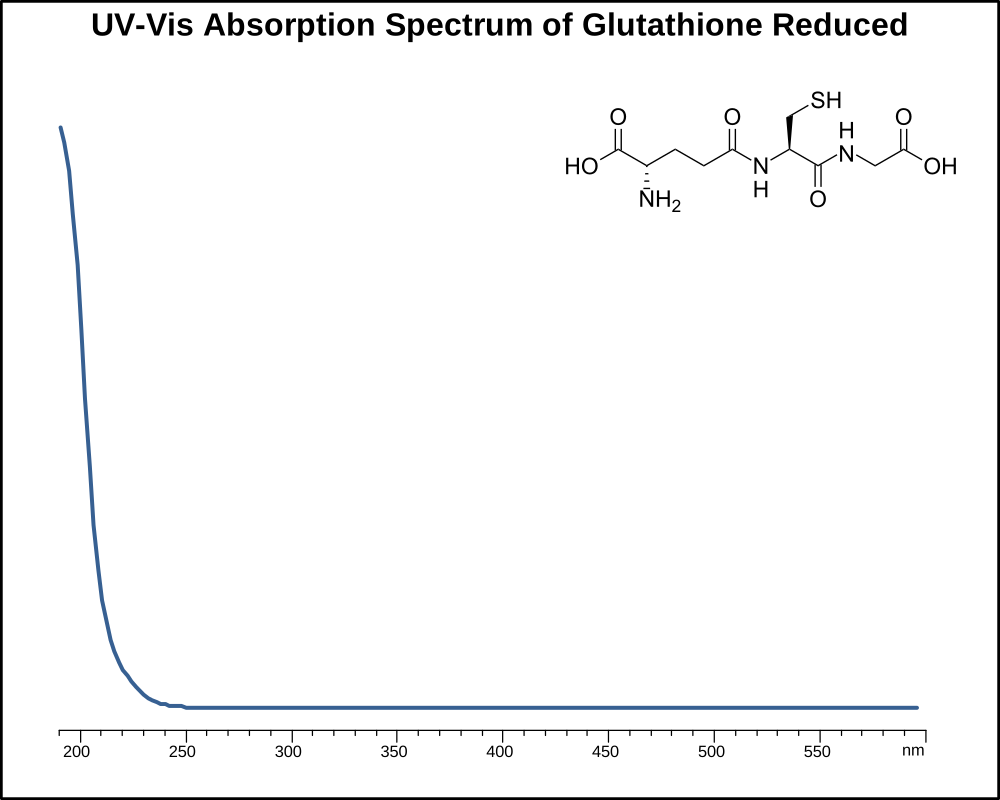
![UV-visible absorption spectra of [2Fe?2S] glutathione (solid line) and](https://www.researchgate.net/profile/Simone-Scintilla/publication/309428488/figure/fig1/AS:423908005421056@1478078952513/UV-visible-absorption-spectra-of-2Fe2S-glutathione-solid-line-and-human-ferredoxin.png)